Mailchimp built its reputation as the entry point for email marketing. For years, it was the obvious starting point: free to start, easy to learn, and good enough for basic campaigns. But as businesses grow, a pattern keeps repeating. The automation that felt adequate starts to feel constraining. The pricing climbs. The deliverability falls short. And somewhere along the way, the tool you started with is no longer the tool you need.
ActiveCampaign sits at the other end of that journey. It is what a significant portion of Mailchimp users migrate to when they outgrow basic email. This article breaks down exactly what changes when you make the switch: where the gaps are, what the numbers say, and how to know if it is the right move for your business.
The headline numbers
Where Mailchimp still holds up
A fair comparison starts with what Mailchimp does well. It is one of the most beginner-friendly email tools available. The interface is clean, the onboarding is smooth, and most people can send their first campaign without consulting documentation. The free plan covers up to 500 contacts, which makes it a genuinely useful starting point for businesses that are just getting off the ground.
Mailchimp's template library is extensive and well-designed. Its brand recognition is strong, which matters when you are working with clients who want to recognize the tool name. And its integration with basic e-commerce platforms like Shopify is solid for simple use cases.
If your email needs are straightforward (a monthly newsletter, a welcome email, occasional promotional sends) Mailchimp covers that well. The problems emerge when you need more.
Automation: where the gap becomes significant
This is the most consequential difference between the two platforms. Mailchimp's automation is designed for simplicity. You get basic triggers (someone subscribes, abandons a cart, makes a purchase), basic branching (if/else), and a limit of around 4 actions per automation on standard plans. That is sufficient for simple sequences. It is not sufficient for complex customer journeys.
ActiveCampaign's automation builder is a different category of tool. You get 75+ native triggers and actions covering contacts, accounts, and deals. There is no limit on actions per automation. You can build branching logic based on behavior, dates, goals, events, and percentages. Automations can trigger other automations. The visual automation map lets you see your entire workflow architecture at once.
The practical difference: in Mailchimp, you build a welcome sequence. In ActiveCampaign, you build a system. New subscribers can be routed based on where they came from, what they clicked, what they purchased, how engaged they are, and what stage they are at in the sales cycle. Each of those paths can branch and converge independently.
ActiveCampaign also includes AI automation generation. Describe what you want in plain language and the platform builds the workflow. Mailchimp has no equivalent.
Pricing and the contact-counting problem
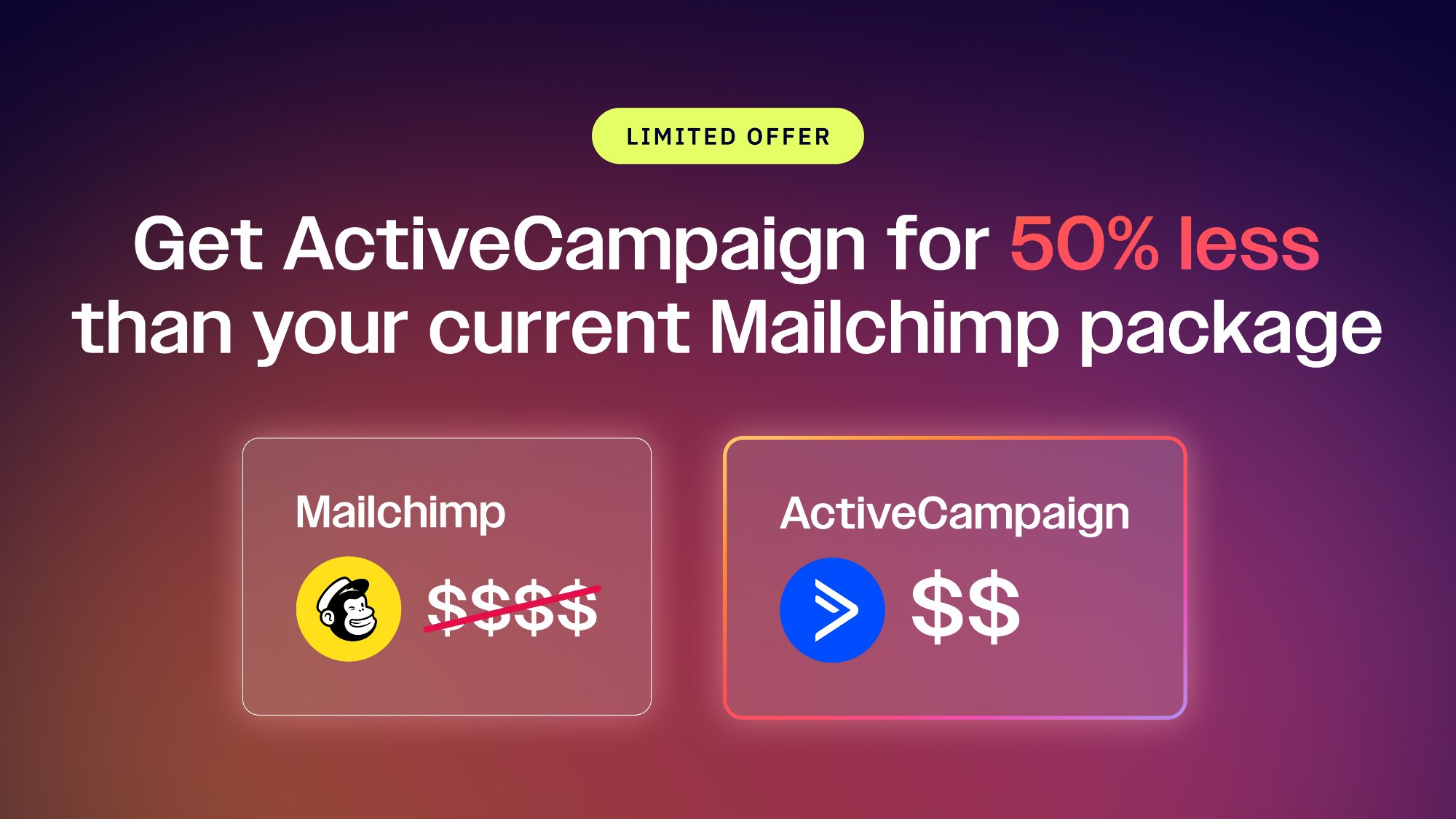
Mailchimp's pricing structure has a specific issue that catches businesses off guard: it charges per subscriber per list. If the same contact appears on three lists, you pay for them three times. For businesses with overlapping segments, which is most businesses that do any real segmentation, this adds up quickly.
ActiveCampaign charges once per unique contact regardless of how many lists, tags, or segments they belong to. For a business with 5,000 contacts spread across multiple segments, this difference can be material.
"We were using Mailchimp previously, which didn't have adequate automation options available. They also charged for duplicate email addresses that appeared in several lists, whereas ActiveCampaign only charges once per email."
Matt L., verified G2 reviewOn raw plan pricing, Mailchimp starts at $13/mo (Essentials) and ActiveCampaign at $15/mo (Starter). The gap is small at entry level. At scale, the automation depth and contact-counting model make ActiveCampaign meaningfully better value for businesses running complex programs.
Deliverability: the number that drives revenue
Deliverability is the percentage of emails that actually reach the inbox rather than landing in spam or bouncing. It is one of the most important metrics in email marketing and one of the least discussed when people evaluate tools.
According to EmailTooltester's independent testing, ActiveCampaign ranks first at 93.4%. Mailchimp ranks third at 92.6%. That difference may sound small, but across a list of 10,000 contacts, it means roughly 80 more emails reaching inboxes per send. Across dozens of campaigns per year, that compounds.
"Mailchimp was easy to use, but our deliverability rates were just so awful. ActiveCampaign's inbox receive rates were way better. There were a bunch of factors that y'all were taking into account that other email providers just weren't. So we switched."
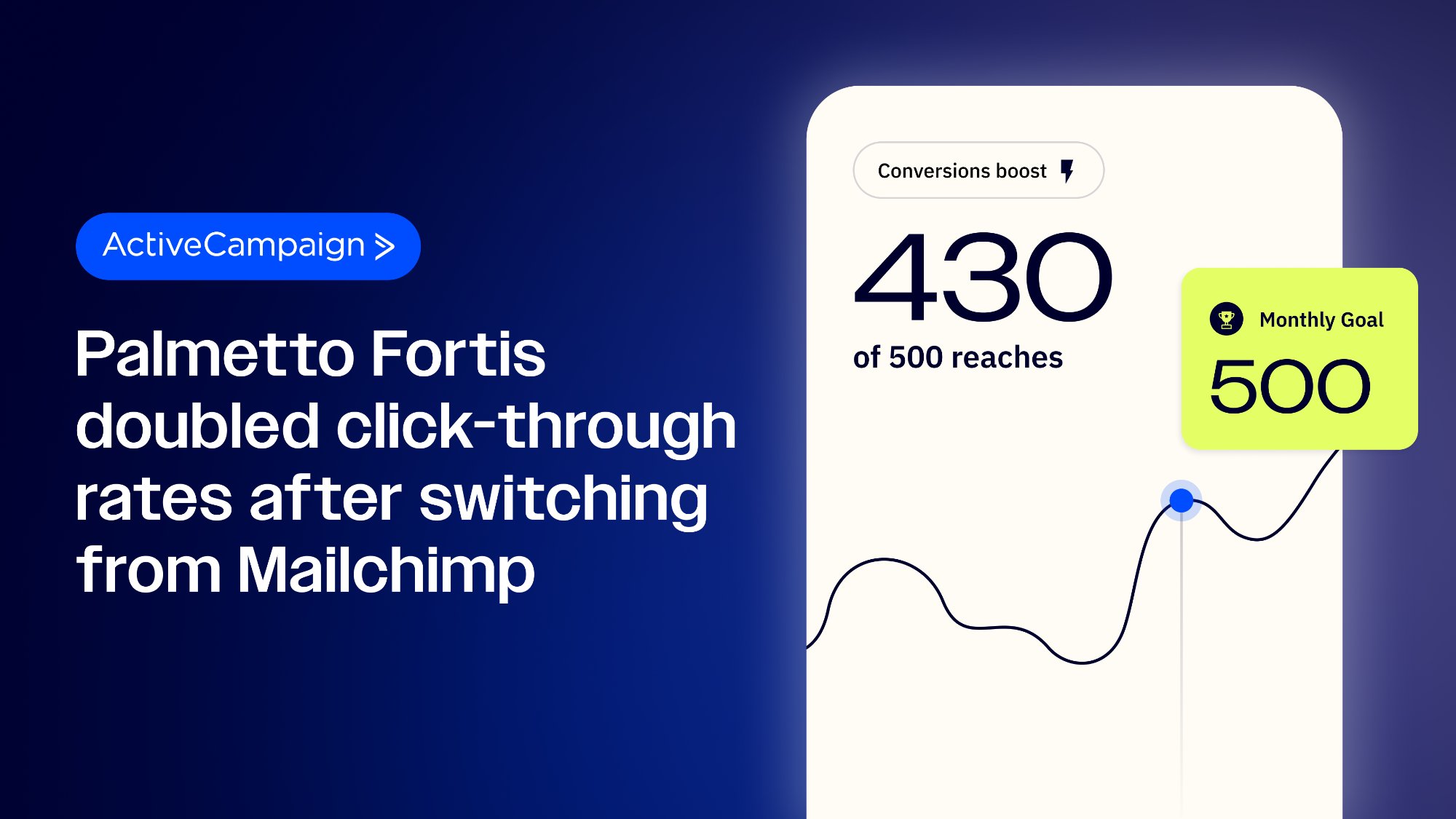
Nyk Rayne, Director of Operations, UN|HUSHEDUN|HUSHED saw a 238% increase in open rates after switching from Mailchimp. Palmetto Fortis saw open rates jump from 22% to 52% alongside 20% year-over-year sales growth. These are not outliers. They reflect a consistent pattern in the migration data.
A detailed feature comparison
| Feature | ActiveCampaign | Mailchimp |
|---|---|---|
| Starting price | $15/mo (Starter) | $13/mo (Essentials) |
| Free plan | No (14-day trial) | Yes (500 contacts) |
| Email deliverability | 93.4% (#1 ranked) | 92.6% (#3 ranked) |
| Automation triggers | 75+ (contact, account, deal) | Under 35 (contact only) |
| Actions per automation | Unlimited | Up to 4 (standard plans) |
| AI automation builder | Yes | No |
| Predictive sending | Yes | No |
| Contact charging model | Once per unique contact | Per contact per list |
| Built-in CRM | Yes (pipelines, deals, scoring) | Basic contact management only |
| Lead scoring | Yes | No |
| SMS marketing | Native, integrated | Limited, third-party required |
| WhatsApp automation | Yes | No |
| Site and event tracking | Full behavioral tracking | Basic email tracking only |
| Integrations | 950+ | ~300 |
| Automation split testing | Yes | No |
| Revenue reporting | Yes (marketing revenue report) | Campaign reporting only |
| Free onboarding | Yes (Plus plan and up) | Never free |
AI and autonomous marketing
ActiveCampaign positions itself as the first autonomous marketing platform, and the AI capability gap with Mailchimp is substantial. ActiveCampaign's Active Intelligence runs through the entire platform: it generates campaigns from a single prompt, builds automations from plain-language descriptions, predicts the optimal send time for each individual contact, and surfaces high-value audience segments automatically.
The AI Campaign Builder generates complete campaign structures including emails, subject lines, and send sequences from a brief description of your goal. The AI Automation Builder translates a plain-language workflow description into a working automation. Predictive Sending optimizes delivery timing per contact, with an average 17% increase in click-through rates according to ActiveCampaign's data.
Mailchimp offers basic AI features: subject line suggestions, content generation prompts, and simple automation recommendations. These are useful. They are not the same category of capability.
The CRM question
Mailchimp describes its contact management as a "marketing CRM," but in practice it is a contact database. There are no pipelines, no deal stages, no sales automation, and no lead scoring. If your sales process involves any handoff between marketing and sales, Mailchimp creates a gap that requires a separate CRM tool to fill.
ActiveCampaign includes a built-in CRM covering pipelines, deal tracking, stage management, and sales automation. Marketing and sales data share the same contact record. A lead that opens a specific email, visits a pricing page, and meets a lead score threshold can be automatically moved to a pipeline stage and assigned to a sales rep. That closed loop between marketing activity and sales action is what ActiveCampaign's CRM enables natively.
Who should stay on Mailchimp
Not everyone needs to switch. Mailchimp remains a solid tool for specific situations. If you are just starting out and a free plan matters, Mailchimp's 500-contact free tier is a reasonable starting point. If your email program consists of simple newsletters and one-step automations, the additional complexity of ActiveCampaign may not be worth it. If your team already knows Mailchimp well and the switching cost outweighs the gains, staying put can be the right call.
Who should consider switching
The case for switching gets stronger as any of these conditions apply: your automations have grown beyond simple sequences; you are paying for duplicate contacts across lists; your deliverability or open rates have plateaued; you want AI-built campaigns and workflows; you need a CRM connected to your email activity; you are running multi-channel programs that include SMS or WhatsApp; or you are scaling past a few thousand contacts and the pricing structure is becoming a liability.
FoodCheri found themselves in this position. After switching from Mailchimp to ActiveCampaign, they saw 65x more customer outreach by email and 14x more leads. Palmetto Fortis doubled their open rates. UN|HUSHED saw a 238% increase. These results reflect what happens when a business's actual complexity finally has a tool built to match it.
Stay on Mailchimp if...
- Switching cost outweighs the operational gains
- You depend on a specific integration only Mailchimp supports
Switch to ActiveCampaign if...
- You need automation beyond simple sequences
- You are paying for duplicate contacts across multiple lists
- You want AI-built campaigns and workflows
- You need a CRM connected to your email activity
- You run or plan to run SMS or WhatsApp alongside email
- Deliverability and open rates are underperforming
The bottom line
Mailchimp is a good tool for where most businesses start. It is not a good tool for where most businesses want to end up. The automation ceiling, the contact-counting pricing model, the absence of a real CRM, and the growing gap on AI capability all point in the same direction. ActiveCampaign is more complex to set up, but that complexity is the point: it handles complexity that Mailchimp cannot.
If you are evaluating a switch, ActiveCampaign offers a 14-day free trial and migration support on paid plans. The migration process is documented and the platform handles list and segment transfer directly.